PROJEKT W PRZYGOTOWANIU. START PROJEKTU DLA NAUCZYCIELI I PRZEDSZKOLI - WRZESIEƃ 2027

ABOUT THE PROJECT

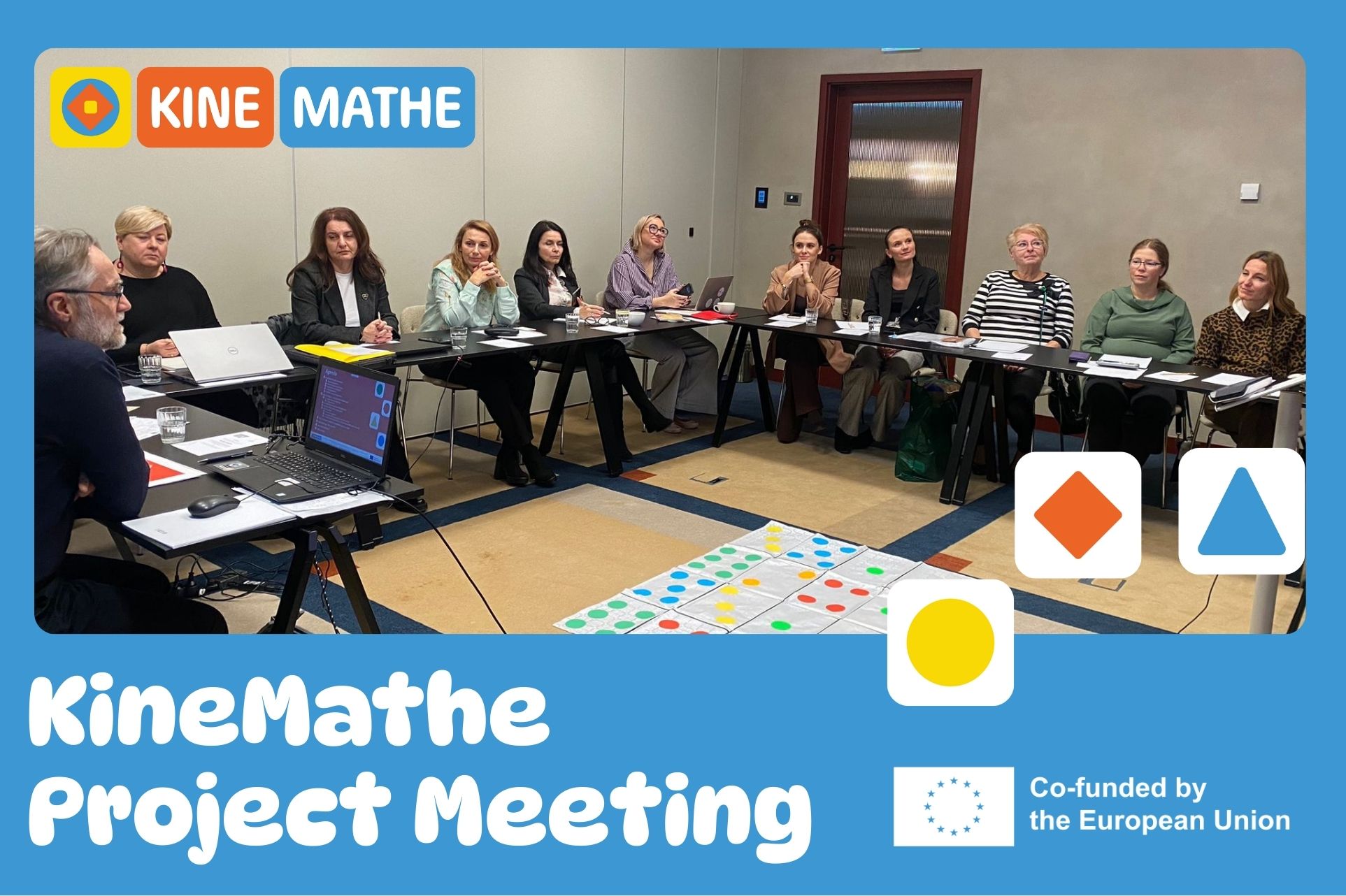
Meet the KineMathe project partners.

Publishers

  • Klett, PoznaƄ, Poland – leading partner
  • Raabe Bulgaria, Sofia, Bulgaria – digital partner

Kindergartens

  • Slavia Kindergarten, Sofia, Bulgaria
  • Piccolino Kindergarten, GƂubczyce, Poland
  • Brezovica Kindergarten, Slovenia

University

  • Univerza na Primorskem, Koper, Slovenia

Foundation

  • Fundacja Wspomagania Rozwoju Dzieci Edyty Gruszczyk-KolczyƄskiej, KnieĆșliny, Poland
LEARN MORE ABOUT THE PROJECT PARTNERS

The KineMathe project was developed in accordance with the European Commission's guidelines to promote kinesthetic approach to mathematics teaching among preschool children. This enables them to learn mathematics in an engaging and effective way. The project's starting point is a comprehensive analysis of the specific learning conditions, outcomes, and educational goals related to mathematics in early childhood education and care (ECEC) in the three partner countries. The project’s goal is to develop methodological and teaching materials as well as a dedicated online platform by means of which they will be made available as open educational resources (OER). Preschool teachers will acquire skills and competencies in using the methodological and teaching materials resulting from the project. The project’s results will be piloted among preschool teachers and children and later a comprehensive dissemination campaign will follow.

The KineMathe project aims to:

‱ facilitate the development of high-quality early childhood education and care (ECEC) programs,

‱ promote mathematics as a fascinating field of activity and improve mathematical skills in children from an early age on,

‱ improve the professional qualifications of preschool teachers in terms of knowledge and methodological competences related to mathematical skills development,

‱ develop in children positive attitudes towards learning mathematics and improve their mathematical competences,

‱ prevent educational deficits and early school leaving,

‱ collaborate with partners from Poland, Bulgaria, and Slovenia on:

- developing a methodological guide for preschool teachers on teaching mathematics using a kinesthetic approach,

- preparing a set of creative kinesthetic games and mathematical activities as well as a mat for children to perform kinesthetic exercises,

- developing a set of evaluation activities with gamification elements,

- testing and disseminating a set of kinesthetic teaching aids for teachers and children in preschools,

- building a multilingual, publicly available open educational resources (OER) platform which will serve as an online digital repository dedicated to preschool teachers interested in mathematics,

- training preschool teachers,

‱ fostering cross-curricular collaboration, innovative teaching methods, continuous professional development, and providing access to open educational resources (OER).

@Pani Zuzia
Dr. Zuzanna Jastrzębska-Krajewska

KineMathe returns mathematics to its origins: body, rhythm, space, and discovery. Through these experiences, abstract structures become cognitively accessible, and mathematical skills can grow harmoniously while the child develops. Creating KineMathe is a source of immense satisfaction for me.

WHY IS IT WORTHWHILE TO PARTICIPATE IN THE KineMathe PROJECT?

1. Free training with a certificate

As a KineMathe project participant, you will receive access to online training which will allow you to gain practical knowledge of the kinesthetic method of teaching mathematics to children. The training will conclude with a certificate confirming your competences.

2. Modern educational materials

The KineMathe project is an excellent opportunity to introduce modern methods of teaching  which facilitate cognitive development in preschool children. With KineMathe, teachers can offer children mathematical games that will not only strengthen their mathematical skills but also help develop general lifelong skills such as logical and critical thinking.

3. Introducing innovation to preschool

Gain access to rich resources which will enrich your daily activities with children: ready-made game scenarios, instructional videos, and a compendium of knowledge about the kinesthetic method of learning mathematics in preschool. All materials were developed by specialists from the Prof. Edyta Gruszczyk-KolczyƄska Foundation in Poland and the University of Primorska in Slovenia with participation of practicing teachers . They are tested and ready for use.

4. Partner Program for Preschools

If at least three teachers from one preschool join the program, the preschool can obtain the KineMathe Partner Preschool status, which entails:

‱ getting a certificate for the preschool, which will increase its prestige among parents and distinguish it as a kindergarten that cares about children's cognitive development;

‱ training for teachers in the kinesthetic method of learning mathematics;

‱ receiving practical teaching materials which will facilitate the organization of engaging and effective learning activities, including a Methodology Guide and resources available on the KineMathe platform.

By participating in the program, you will gain innovative tools
and skills
tailored to the needs of today's preschoolers!

Prof. Milan Hosta

KineMathe powerfully demonstrates how conceptual learning through movement can enrich early mathematical literacy. By grounding numbers, relations, and patterns in embodied experience, children develop deeper understanding, motivation, and confidence. Learning mathematics not only with the mind, but holistically through the playful setting is the best way to achieve lasting effects.